Showing posts with label fantasy. Show all posts

Wednesday, August 20, 2014

Happy Birthday, H.P. Lovecraft!


"I couldn’t live a week without a private library - indeed, I’d part with all my furniture 
and squat and sleep on the floor before I’d let go of the 1500 or so books I possess."

Howard Phillips Lovecraft - Born August 20th, 1890

Friday, September 20, 2013

George RR Martin - Born September 20th, 1948

Portrait by Anita Kunz

“A mind needs books as a sword needs a whetstone, if it is to keep its edge.” 
George RR Martin - Game of Thrones

Sunday, September 1, 2013

Edgar Rice Burroughs - Born September 1st, 1875

Portrait by Don Marquez

“If I had followed my better judgment always, my life would have been a very dull one.”
Edgar Rice Burroughs - Creator of Tarzan and John Carter of Mars
Born September 1st, 1875

Tuesday, August 20, 2013

Howard Phillips Lovecraft - Born August 20th, 1890


“At night, when the objective world has slunk back into its cavern and left dreamers to 
their own, there come inspirations and capabilities impossible at any less magical and quiet hour. No one knows whether or not he is a writer unless he has tried writing at night.” 


Portraits by Francesco Francavilla

Thursday, February 28, 2013

Tuesday, January 8, 2013

Wheel of Time: Memory of Light Released Today


Brandon Sanderson wraps up the final chapter of Robert Jordan's Epic Fantasy Series today. TOR created a neat video focusing on its Legacy of inspiration to current fantasy writing.

Also the cover art by master fantasy artist Michael Whelan is now available as print here.


 And there is fantastic post on Whelan's art/design process for the cover here.


Thursday, January 3, 2013

J.R.R. Tolkien - Born January 3rd, 1892

 Portrait Art by Audrey Benjaminsen

All that is gold does not glitter,
Not all those who wander are lost;
The old that is strong does not wither,
Deep roots are not reached by the frost.

From the ashes a fire shall be woken,
A light from the shadows shall spring;
Renewed shall be blade that was broken,
The crownless again shall be king.

John Ronald Reuel Tolkien
January 3, 1892 – September 2, 1973

Saturday, March 31, 2012

Book Trailer - Infamous By Sherrilyn Kenyon


This fun Book Trailer for Infamous almost looks like it's a new TV series on the CW. I'd stay tuned for this after Vampire Diaries - wouldn't you? Read an excerpt from the latest installment in Kenyon's Chronicles of Nick YA series @ sherrilynkenyon

Monday, July 4, 2011

At the Queen's Command: The First Book of the Crown Colonies

July the 4th - the perfect day to recommend this fantastic alternate reality tale of the American Revolution by Michael A. Stackpole. The Queen's Command if the first book in what will be the Crown Colonies Series. It's setting is in a world of practical magic, domesticated flightless war dragons, semi-chameleon skinned native people, dark arts as science, and yes even zombies. It's has all the essential elements of the frontier adventure tales of James Fenimore Cooper or Jack London - full of the mixed sense of danger and promise in the discovery of a new land. But additionally there is an underling  layer of political conspiracy and Court intrigue that promises to play out through the continuing book series. Mystria is the name of alternate young Colonial America that finds itself increasingly entangled in the concerns of the battling Old World Empires of Norillia (England) and Tharyingia (France). Captain Owen Strake is capable the young protagonist who lands in the New World ready to do his Royal duty and secure a future back home only to find he may have more in common with the colonists like the Wilderness Scout Nathaniel Woods and Native Prince Kamiskwa who aid him. And while there is obviously a lot of manly action and battle as to be expected for the time period - the female characters involved are well drawn -- portrayed as smart, independent minded and holding power and influence behind the scenes. The main storyline managed to have a satisfying resolution while an interesting character revelation near the end of the book sets the stage for some more of the Court intrigue aspect I mentioned -- and I look forward to next to the next installment. Visit the author's website http://www.michaelastackpole.com for more info.

Friday, May 6, 2011

World of Warcraft: Rise of the Horde by Christie Golden


Every once in awhile a book comes along that changes everything for you. World of Warcraft: Rise of the Horde is not that book, but it's a fun read.

Set in the universe of World of Warcraft, this book serves as one of the several prequels to the insanely popular MMO and gives some interesting background information of one of the two major factions, the Horde. Players of the game will enjoy something akin to a "Santa Clause is Coming to Town" experience as we meet legendary characters from Orc history and follow them through the dark choices made and the terrible results - which of course sets up the situation that players enjoy every day in game.

What's fun is, even if one knows nothing of WoW and it's many plots and subplots, it's an interesting story of how fear and war can corrupt a people.

Again, if you want a book that'll change everything, I'd say try Atlas Shrugged, perhaps The Stranger, maybe even Little Heroes by Norman Spinrad, but if you want a fun little book that will take you away and enrich your WoW experience, World of Warcraft: Rise of the Horde by Christie Golden is the right book.

For the Horde!

Friday, April 22, 2011

To Say Nothing of the Dog


My all-time favorite book. Willis deftly handles time travel, comedy, romance, adventure, historical drama, the truth about cats and dogs, mystery and a touch of metaphysics. Clever and hilarious, To Say Nothing of the Dog follows the historian Ned Henry in a comedy of errors as he travels between Victorian England, the Blitz, and the not-so-distant possible future on a quest to find the Bishop's Bird Stump, solve (or save) a calamity, defeat the Nazis, and possibly stop the universe as we know it from being destroyed. Willis weaves an intricate plot into a creative, cohesive tapestry that defies any attempt at doing it justice in a short description. I've read this book to ragged shreds and still find something new in the story each time. Cleverly constructed, laugh-out-loud funny, likeable characters... to say nothing of the dog.

Monday, April 18, 2011

Review: Sailing to Sarantium


Guy Gavriel Kay has been a favourite author of mine since my mid-teens, when I lucked into a copy of his Fionavar Tapestry at my school's library. His eye for detail, even as he is creating worlds, adds depth and realism to his fantastical histories: this is an author who loves to research and create parallels to real events.

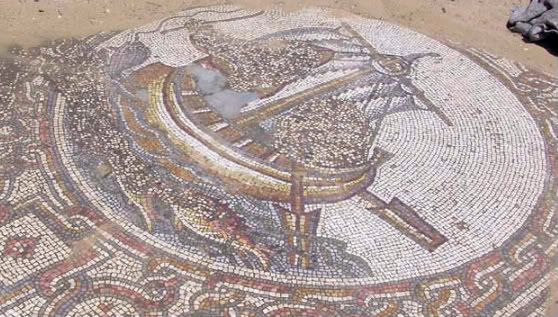
Sailing to Sarantium is the story of a craftsman, Caius Crispin, a mosaicist of skill, with a puzzle-solving and rather open mind. The Emperor in Sarantium is in need of skilled men to build and decorate for him a structure for their god, to replace one that was destroyed in an uprising a few years before. The book is mostly the story of Crispin's journey, with specific encounters that provide insight into his character and approach to the world. It touches on aspects of the history of our own Byzantine Empire, and the various philosophies, sects and schisms of the early Christian church. Crispin's Emperor shares characteristics with the historical Emperor Justinian, who had the Hagia Sophia built after its predecessor was destroyed in riots. The plague that took Crispin's family echoes the outbreak of the bubonic plague midway through Justinian's reign.

Throughout his fantasies, and using that unique quasi-historical perspective, Kay gives insight into aspects of life that affect his modern audience: mob mentality for one memorable example, or how small events in a life can shape it for years. Kay's writing doesn't pose questions and give pat answers: it's meaty and rich and feeds the thinker, with both larger theological issues, like whether one man's experience of god diminishes those of other men; and smaller more personal ones, like how one copes with grief or a loss of innocence.

In Crispin's world, “sailing to Sarantium” means taking a big step on a bigger journey, the making of a life change. Reluctant at first, he commits with intensity to the changes, once he sees that he has really no choice but to go. His journey, not much of it by actual ship, takes him through two soul-shaking encounters – with the old “pagan” ways of the tribal forest folk, who make blood sacrifices to their forest-dwelling, animal bodied deity, and with the roots of his own religion of the sun-god, Jad, though a mosaic in an old shrine.

I am very fond of stories about ordinary but extraordinary individuals: warrior kings and mastermind evil geniuses are all well enough, but both Bilbo and Frodo were simple folk, and the tales that allow simple folk to be heroes are the most accessible, I find. Crispin is not so much a simple man: he's layered with complexities of thought and his past haunts him, but he is a labourer who happens to love and be very good at his craft. I know many people much like him, and admire them as well.

Kay's earlier work, the Fionavar Tapestry touched on the universality of certain myths, and how echoes can be found across many cultures: he did so by making the origin of those myths (and the final resolution to several great tragedies within them) one source world, much as Amber is the source of the shadow-worlds that spin from it in Zelazny's celebrated series, the Chronicles of Amber. In Kay's works, that source world is known as Fionavar.

It's very interesting to me that his first work was about Fionavar, and all his subsequent books make fleeting reference to this legend/heretical philosophy. Even as the Fionavar series introduced the readers to the philosophy of multiple universes and certain theological conundrums therein, each subsequent work has a different theology, religion or philosophy as a recurrent theme. Kay doesn't use the religious ideas thus displayed as a bludgeon of his own beliefs, (indeed, with the varied perspectives of his characters, his own beliefs are anyone's guess), more as a incisive look into our own culture's religious history. The comparisons are less with the historical people or the events of the time, than with the theologies and flavour of those contemporary tensions.

One great grace of Kay's characters is that they never feel too modern. At no point does he snap the reader out of the atmosphere of the time, with overly modern language, attitudes or responses. Even his inventive cursing rings true to the setting and timeframe.

In Sailing to Sarantium, schisms within one belief are highlighted. Eastern and Western philosophies have collided, and through Imperial intervention, come to an uneasy truce. Our craftsman hero is brought to a cosmopolitan and unutterably subtle court, ruled by an ambitious and ruthless workaholic Emperor and his equally ruthless and inspiring Empress. Heathens from the desert threaten in the east, the once-civilized southern states are fractious under the new rulers, and in the West barbarian tribes have only just been conquered. Crispin's story, his companions, and the story of the Empire itself are laid like a tiles in a mosaic into this rich and historically fascinating setting. I am greatly anticipating diving into Book II, Lord of Emperors.